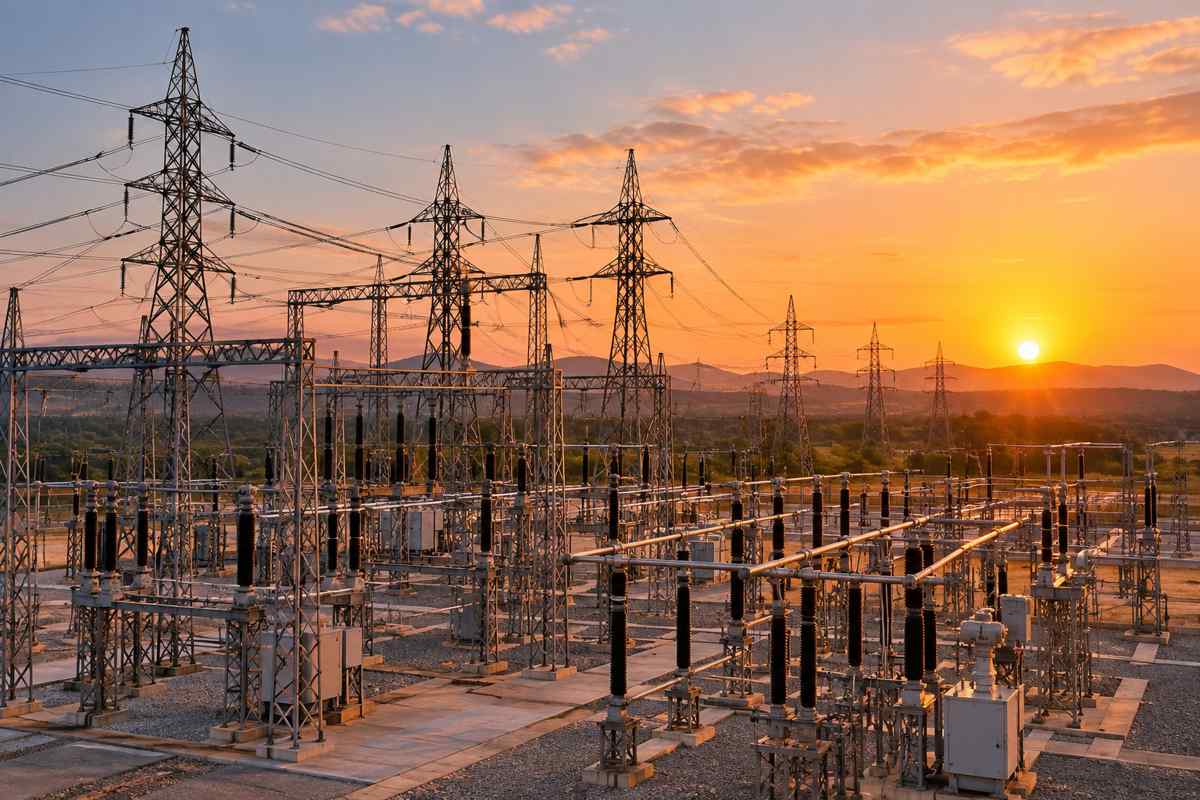

India’s energy transition faces a growing infrastructure challenge as the development of transmission networks struggles to keep pace with renewable energy generation and emerging sources of electricity demand, including data centres and green hydrogen projects. Transmission lines and transformers can take three to four years to build or procure, while high-voltage direct current (HVDC) transmission projects can require up to six years, according to industry experts.
Transmission Timelines And Equipment Constraints
Speaking at RE: DIALOGUES 2026 convened by Policy Perspectives Foundation (PPF) and Orange Circle Energy (OCE), PC Garg, Principal Advisor at NSEFL, said transmission infrastructure has become critical as the country moves towards larger electricity loads from industrial consumers and emerging sectors. He highlighted the difficulty of moving electricity from renewable energy-rich regions such as Rajasthan and Gujarat to consumption centres located hundreds or thousands of kilometres away. “The time has come when power has to be delivered in bulk by the generator to the bulk consumer,” he added, underlining the importance of transmission networks as India’s electricity demand evolves.
Garg said transmission projects that previously took around two to two-and-a-half years to complete are now facing longer timelines because of right-of-way constraints, rising land costs and difficulties in securing the land required for infrastructure. The construction of transmission lines, including those operating at 400 kilovolts (kV) and 765 kV, can now take three to four years, he said. Transformer availability is another constraint, with procurement timelines also stretching to three to four years. He pointed to the scale of electricity infrastructure now required, noting that the sector is increasingly dealing with gigawatt-scale requirements rather than the megawatt-scale projects that were more common earlier.
The challenge is particularly pronounced for HVDC transmission, which is required to move large volumes of electricity over long distances. Garg said such projects can take six years to build, while awarding them in India can itself take around two years, adding to the time required to bring transmission capacity online. India also remains dependent on two to three companies globally for the relevant HVDC technology, Garg said. He identified this limited supplier base as another concern as countries expand their high-voltage transmission networks.
Demand Adds To Planning Uncertainty
The transmission challenge is emerging alongside changes in the nature and location of electricity demand. Ritu Mathur, Director at The Energy and Resources Institute (TERI), said India’s energy requirements cannot be assessed simply by comparing the country with China, Malaysia or other economies because its development trajectory, electrification plans and efficiency improvements are different.
Mathur highlighted the growing electricity requirements of data centres, particularly as artificial intelligence applications expand. She said electricity demand growth could differ significantly across sectors, with data centres potentially growing at around 30 per cent, depending on their loads and the extent of AI adoption, compared with approximately 9 per cent growth previously projected for the commercial sector.
These emerging requirements could complicate infrastructure planning because decisions on power procurement and transmission access may come relatively late in a project's development cycle. Ronnie Khanna, Program Lead at NITI Aayog, highlighted how data centres may choose to source electricity through distribution utilities, captive generation or open access, with the eventual procurement route influencing the infrastructure required.
Khanna also stressed the importance of state-level planning for the energy transition, including identifying the investments and projects needed to meet future electricity requirements. Such planning becomes more difficult when demand projections, procurement choices and infrastructure development timelines do not align. Uncertainty around future electricity demand, renewable generation and the effects of climate change makes system-level resilience important.
Nidhi Sarin, Director – Energy Transition at GEAPP, said India’s energy transition would need to account for differences in regional resources, industrial structures and development requirements rather than follow a single international model. She pointed to the renewable energy potential of states such as Rajasthan, Gujarat and Maharashtra, while noting that coal-rich regions such as Odisha and West Bengal face different transition challenges. Sarin said India could draw lessons from other countries where their experiences matched its requirements, but cautioned against direct comparisons that overlook differences in resources, skills and readiness.
As India expands renewable energy capacity and electrifies more parts of its economy, the pace of transmission development will be a critical factor in determining how effectively that power reaches consumers. The discussion underscored that generation capacity alone will not be sufficient without timely investment in transmission networks, substations and transformers.