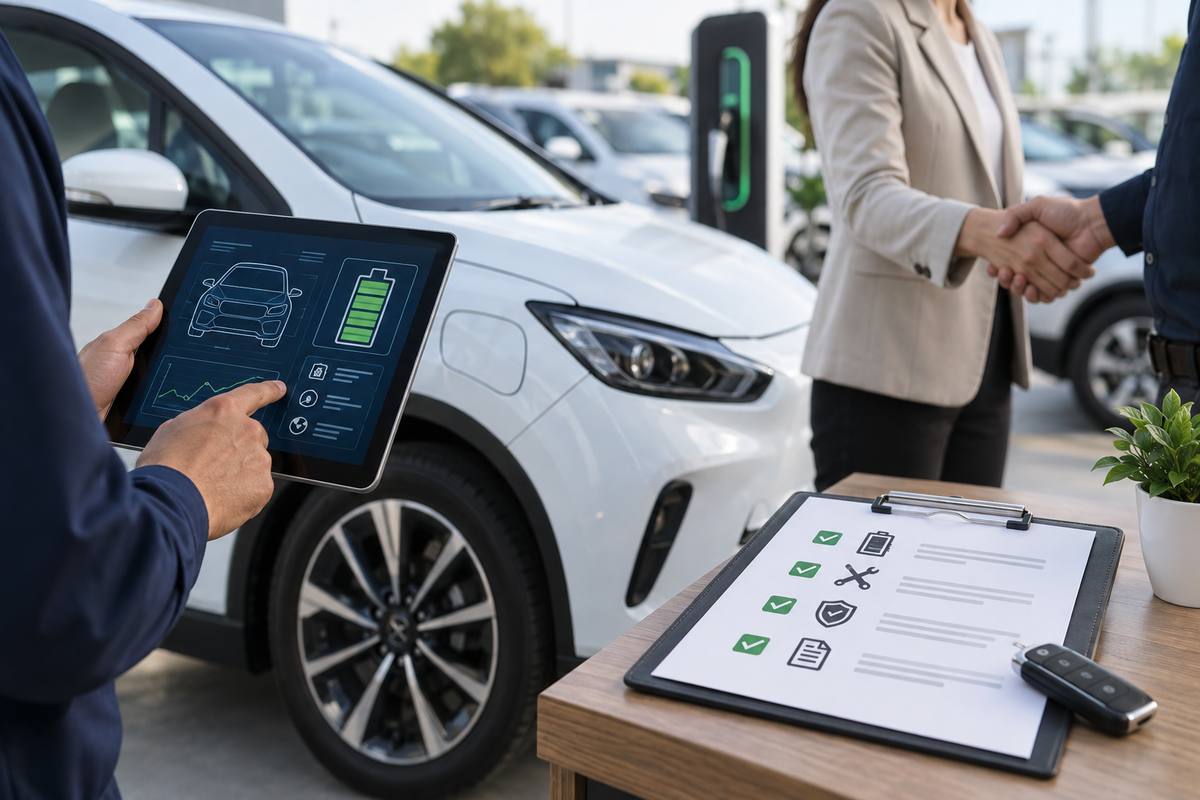

India’s pre-owned EV market will need more than buyer demand to scale. Industry executives say transferable warranties, certified used-EV programmes, standardised disclosures and better access to vehicle data are essential to create confidence in the second ownership cycle.
As more electric vehicles enter the secondary market, responsibility for building trust is shifting towards OEMs, regulators and financiers. Used-EV buyers currently face uneven access to service histories, battery information, warranty coverage and replacement-cost data, making transactions harder to evaluate than in the mature ICE market.
The next phase of EV adoption will therefore depend on whether the industry can make the second ownership cycle as structured as the first.
OEMs Need To Support The Second Owner
Certified pre-owned programmes could give buyers access to verified vehicle histories, diagnostics and after-sales support rather than relying largely on seller disclosures.
Gunjan Malhotra, Co-founder, Komaki Electric Vehicles, said, “OEMs can provide buyers with basic information on the battery, service history, warranty and likely replacement costs.”
Transferable warranties could be particularly important because battery coverage attached only to the original owner reduces protection precisely when a vehicle enters the resale market.
Naveen Gupta, Founder and CEO, Trev Mobility, said, “OEMs need to provide greater transparency around battery health, warranties and lifecycle. Regulators can help by creating common standards for battery certification and vehicle health reporting.”
OEMs could also improve confidence through clearer repair pathways, continued software support and certified buy-back programmes. Assured or minimum buy-back values could give first owners greater visibility on depreciation while creating a more organised pipeline of vehicles for resale.
Sriram Kannan, Founder and CEO, RouteMatic, said the industry also needs clearer repair and refurbishment pathways, so that battery problems do not automatically translate into the cost of replacing an entire pack.
“If every battery issue is seen as a full-pack replacement, the used market will carry an unnecessary risk premium,” Kannan said.
Regulators Can Create A Common Rulebook
The regulatory challenge is to establish consistent disclosure standards without creating a fragmented system across manufacturers and resale platforms.
Pankaj Goyal, Co-Founder and COO, AutoNXT, said, “Regulators can help by establishing common battery-health reporting standards, encouraging independent certification and creating a framework that gives lenders, dealers and buyers access to reliable vehicle and battery data.”
A common vehicle-health framework could include battery condition, warranty status, repair history and major component replacement records. Standardisation would allow buyers to compare vehicles more easily while giving lenders a clearer basis for asset valuation.
Abiram Menon Methil, CEO, Magron Novus, said, “Regulators can establish common standards for battery-health certification and vehicle-history disclosure. Financiers also need better access to vehicle and battery data.”
Kannan also called for a standardised battery-health certificate covering battery condition, warranty and service history, alongside access to reliable vehicle and battery data for lenders and insurers. He argued that the residual value of batteries beyond their automotive use should eventually form part of the vehicle’s overall economics.
The objective is not simply to create another compliance layer. A credible disclosure and certification framework could lower information asymmetry across the entire resale chain, improving pricing for sellers while reducing perceived risk for buyers and lenders.
As India’s EV market matures, the strength of the pre-owned ecosystem will increasingly influence the economics of buying a new EV as well. A vehicle with a clearer resale pathway, transferable protection and predictable second-life value becomes easier to finance and easier to own.
Building that market will require OEMs to remain accountable beyond the first sale and regulators to create a common framework that follows the vehicle through subsequent ownership cycles.