
Every major energy crisis changes the way nations think about power. Some emerge stronger because they use the crisis to redesign their energy systems. Others simply replace one dependency with another.
Europe's experience after the 2022 energy crisis offers an important lesson. The continent moved quickly to add renewable energy and reduce its reliance on Russian gas. Yet, years later, energy costs remain high, industries continue to feel the strain and dependence on imported fossil fuels has not disappeared. International Energy Agency Executive Director Fatih Birol recently described Europe's slow pace of electrification as a ‘major mistake’. His observation goes to the heart of the issue: renewable capacity addition, by itself, does not create energy security.
India has the advantage of learning from that experience before facing a similar challenge. Unlike Europe, we are not rebuilding after an energy shock. We are powering one of the fastest economic transformations the world has seen. Over the next two decades, demand for electricity will rise dramatically as factories expand, cities grow, data centres multiply, and millions of people shift to electric mobility. The question is not whether India will need more power, the real question is whether that power will make us more self-reliant.
Our renewable energy journey has been extraordinary. In little over a decade, solar and wind have moved from the sidelines to the centre of India's energy story. But we should not mistake capacity addition for mission accomplished. Installing more gigawatts is important, but it is only the beginning. Energy security is ultimately about reducing dependence. Every unit of clean electricity should help replace imported coal, oil or gas. If renewable power cannot reliably reach factories, transport systems, homes and businesses, we remain vulnerable to global fuel prices and geopolitical disruptions.
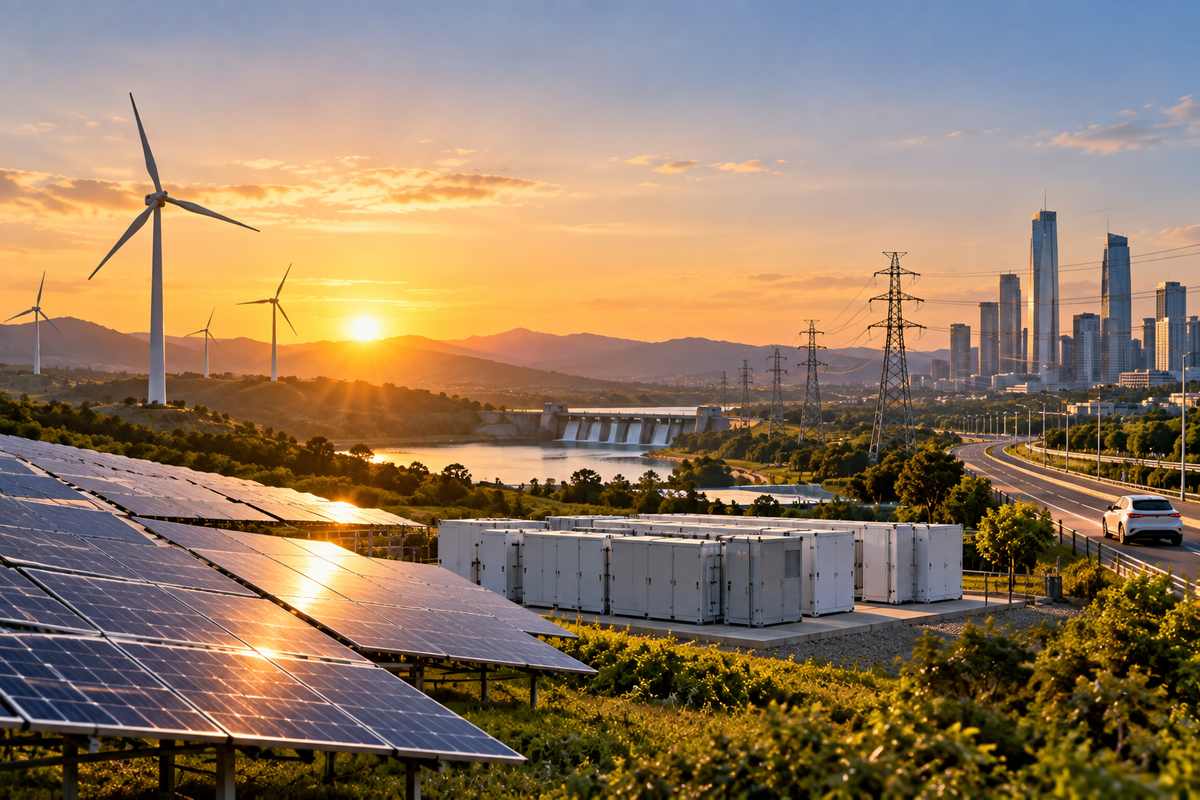
That is why the next phase of India's transition has to be about integration. A solar park is only as valuable as the transmission network that carries its power. A battery is not merely a storage device; it is what makes renewable energy available after sunset. An electric vehicle is not just cleaner transport; it is one less vehicle dependent on imported oil. Green hydrogen is not simply another clean fuel; it is India's opportunity to decarbonise sectors where electricity alone cannot. These are not separate conversations. They are different pieces of the same energy puzzle.
The same applies to manufacturing. Tomorrow's energy race will not be won only by countries that generate clean power. It will be led by those that build solar modules, batteries, electrolysers, power electronics and grid technologies. India cannot afford to replace dependence on imported fossil fuels with dependence on imported clean-energy equipment. The transition must strengthen our industrial capability as much as our climate credentials.
There is another principle that deserves equal attention and that is affordability. Consumers and businesses embrace technologies when they make economic sense. Clean energy must therefore become not only the sustainable choice but also the cheapest and most reliable one. That will require continued investment, policy stability and electricity markets that reward efficiency and innovation.
India enjoys an advantage that few countries have. Much of the energy system that will power our economy over the next three decades is still being built. Unlike many developed nations that are trying to retrofit ageing infrastructure, we have the opportunity to design ours for the future—one that is cleaner, smarter and far more resilient. That also means we can learn from others' experiences, avoid costly detours, and build an energy architecture that is integrated from the outset rather than pieced together over time.
Ultimately, the success of India's energy transition cannot be measured by the number of gigawatts we install or the scale of investments we attract. Those are important milestones, but they are not the destination. The real measure of success will be whether we reduce our dependence on imported fossil fuels, create globally competitive industries powered by clean energy, strengthen domestic manufacturing across the renewable value chain and provide reliable, affordable power that fuels economic growth. In an increasingly uncertain geopolitical environment, energy security is as much about resilience and self-reliance as it is about sustainability.
Renewable energy will undoubtedly remain the cornerstone of our country’s transition. But the future belongs to countries that can seamlessly integrate clean generation with modern grids, storage, electrification, green hydrogen and domestic manufacturing. If we get this equation right, India will not simply meet its climate commitments; we will build an energy system that strengthens our economy, enhances our strategic autonomy and positions the country as a global leader in the clean energy era.